
The Invisible Wall: Why Making Fraudsters Show Their Face Kills Online Theft Before It Starts
Discover how dynamic, trigger-based biometric identity verification acts as an invisible wall that repels online fraudsters while letting legitimate customers slide through seamlessly.

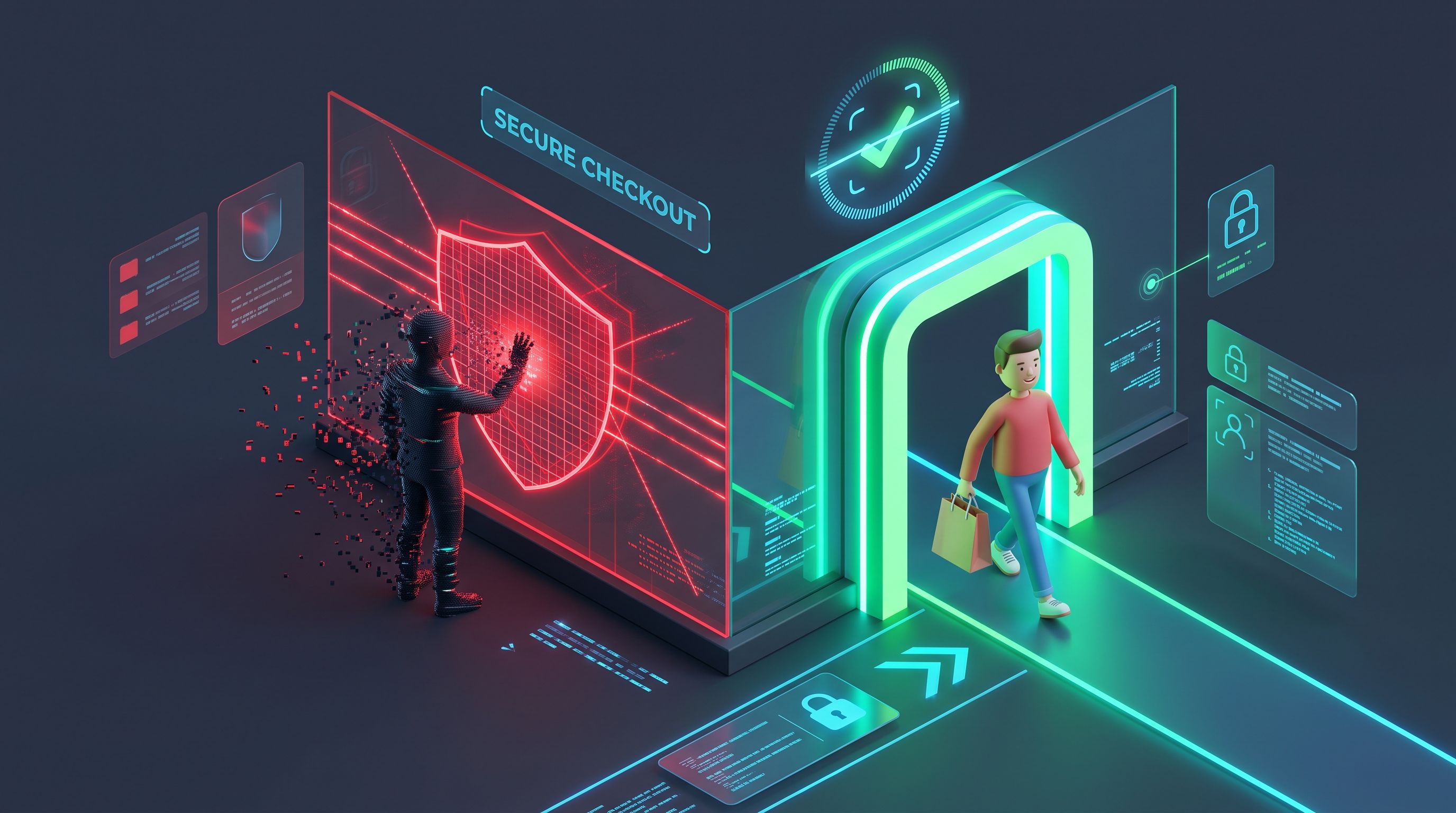
Modern online fraud detection systems spend billions trying to beat cybercriminals at their own game. We build complex risk engines that analyze IP addresses, device fingerprints, keystroke dynamics, and behavioral telemetry.
Yet, card-not-present (CNP) fraud continues to surge. Why? Because sophisticated fraud rings know how to spoof IP addresses, emulate clean browser profiles, and buy stolen credentials off the dark web in bulk.
To automated risk scores, a professional fraudster looks surprisingly legitimate. But the moment you require them to show their real face behind an ID, the entire unit economics of their attack collapse.
Here is why biometric identity verification is the ultimate online fraud deterrent—and how to trigger it intelligently without adding friction for your best customers.
1. The Psychology of Fraud: The Deterrent Effect
Cybercriminals rely on anonymity and scale. A single fraudster or automated botnet can attempt thousands of unauthorized transactions a day using stolen credit card batches or hijacked user accounts.
When an online checkout flow presents a quick, camera-based identity check (liveness scan + document match), two powerful things happen:
- The Instant Drop-Off (Self-Selection): Fraudsters know that submitting a live video or scanning a document leaves a digital trail that can bind their physical identity to a crime. When faced with a face-check, fraudsters abandon the cart on their own. You don’t even have to reject them—they walk away.
- Botnet Neutralization: Automated scripts and attack bots cannot bypass 3D passive liveness detection. Replay attacks, printed photos, and deepfake injection feeds fail immediately at the camera layer.
Meanwhile, legitimate customers—who are already used to scanning their face with FaceID or tapping an app to verify their identity—perceive a brief, polished check as a sign that your brand takes their security seriously.
2. Precision Targeting: Triggering Checks When Risk Demands It
The biggest mistake merchants make with fraud prevention is applying the same friction to every customer. Identity verification should not be a roadblock on a $15 order from a 5-year-old active account.
Instead, modern fraud prevention engines trigger a ZeroTrust verification session dynamically based on high-risk checkout signals:
High-Risk Checkout Signals to Target:
- High Cart Value: Set dynamic spend thresholds (e.g., any transaction over $500 or $1,000) where the cost of a chargeback far outweighs the 10-second verification step.
- Fulfillment Choice (BOPIS & Locker Pickup): Orders marked for "Buy Online, Pickup in Store" or third-party parcel lockers strip away standard shipping/AOV verification signals. Triggering a quick online face check at checkout ensures the buyer is verified before the order is sent to the store for fulfillment.
- High-Loss & High-Return SKUs: Specific inventory categories—like flagship smartphones, luxury designer handbags, trending collectibles, or high-end graphics cards—suffer disproportionate fraud and return abuse. Flagging specific SKUs ensures protection where inventory margins are most vulnerable.
- Account-Level Anomaly Signals: A sudden change in shipping address, a new device login on a dormant account, or a first-time high-value order should automatically escalate the transaction to an identity check.
3. Legit Customers Pass, Fraudsters Disappear
The traditional friction tradeoff used to be binary: increase security and destroy conversion rates, or lower security and absorb chargebacks.
ZeroTrust technology rewrites that equation:
| Customer Type | Behavioral Response to Face Verification | Outcome for Merchant |
|---|---|---|
| Legitimate Buyer | Completes a sub 30-second, browser-native scan on their phone or desktop via WebRTC without downloading an app. | Sale Completed with zero-storage compliance and full dispute protection. |
| Account Takeover / Fraudster | Recognizes the biometric deterrent, knows their deepfake or stolen card won't pass liveness, and abandons the cart. | Prevented Loss without manual review costs or inventory lockup. |
| Bot / Automated Script | Fails the 3D passive liveness check instantly upon camera initiation. | Automated Block with full logging tied to the order reference. |
4. Why Zero Trust Identity Works Where Others Fail
Traditional ID verification vendors ask you to trade one liability for another: you stop fraud, but you end up storing gigabytes of sensitive user selfies and driver's license scans on third-party servers—turning your platform into a prime target for data breaches and CCPA/GDPR fines.
ZeroTrust operates on zero storage:
- Ephemeral Processing: Biometric face matching and document extractions run in memory and are immediately purged. Raw photos are never stored.
- Minimal Audit Tokens: You receive a cryptographically signed verification token (
status: PASSED, timestamp, and your internalorder_id) that proves compliance during a chargeback dispute without holding sensitive PII. - No App Installs: Runs entirely in the mobile or desktop browser via lightweight WebRTC, featuring an instant QR-code handoff for desktop users who need to complete the check on their phone.
The Bottom Line
You don't need to lock down your entire store to eliminate online fraud. By applying smart, trigger-based identity verification at the exact moments where cart value, product risk, or fulfillment choice indicate danger, you turn your checkout into an invisible wall: legitimate customers slide through seamlessly, and fraudsters disappear on their own.
Ready to Get Started?
See how ZeroTrust can verify identities in under 30 seconds.
Related Articles

California AB 1263: What Firearms Retailers Need to Know About the New Accessory Law
Assembly Bill 1263 takes effect January 1, 2026, creating new age verification and compliance requirements for selling firearm accessories to California residents. Complete guide for retailers.
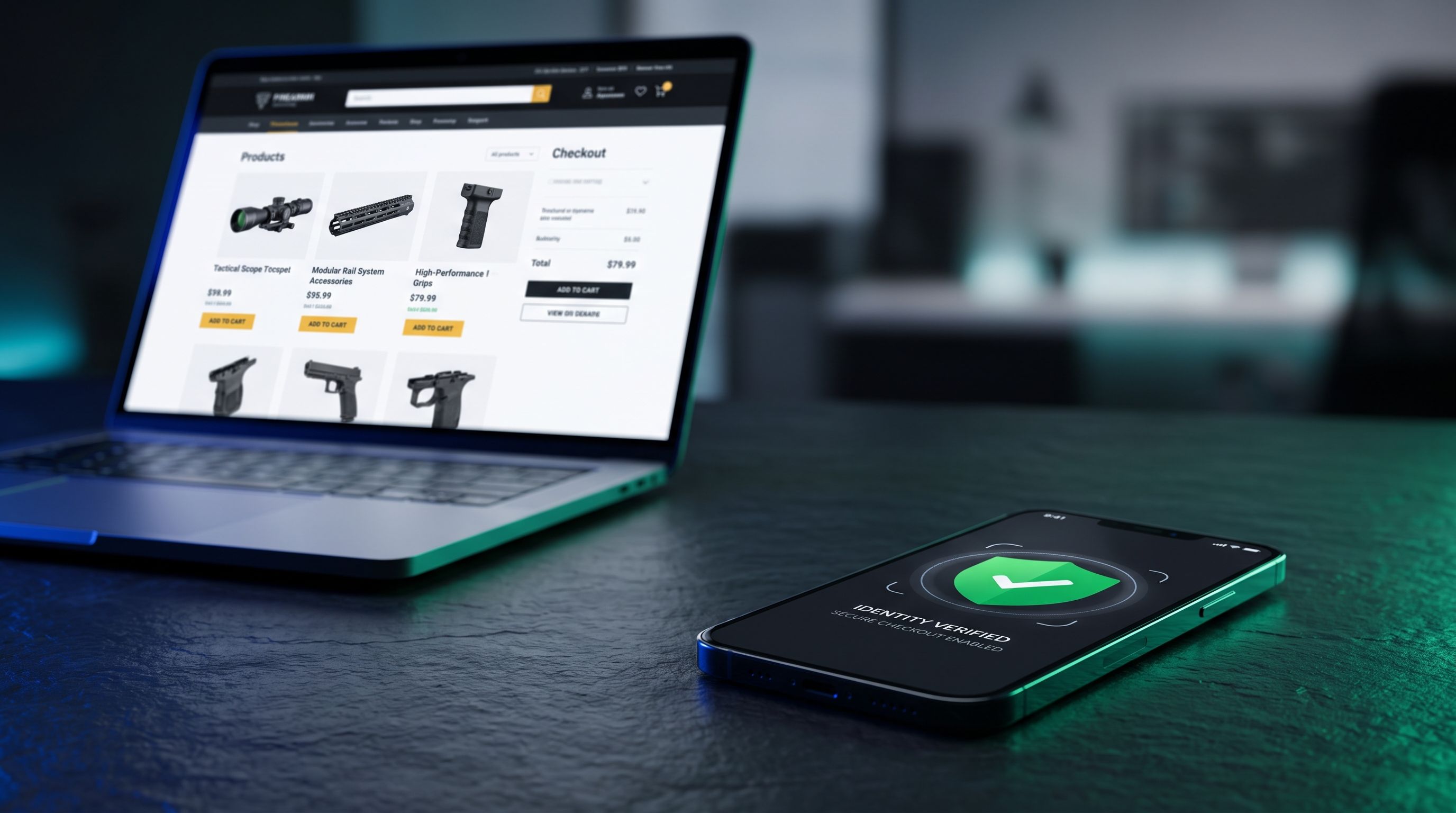
How a High-Volume BigCommerce Firearm Accessory Retailer Automated California AB 1263 Compliance Without Hurting Conversions
How a high-volume BigCommerce firearm accessory retailer automated California AB 1263 compliance — age verification, ID matching, and audit records — directly inside checkout without disrupting conversions.
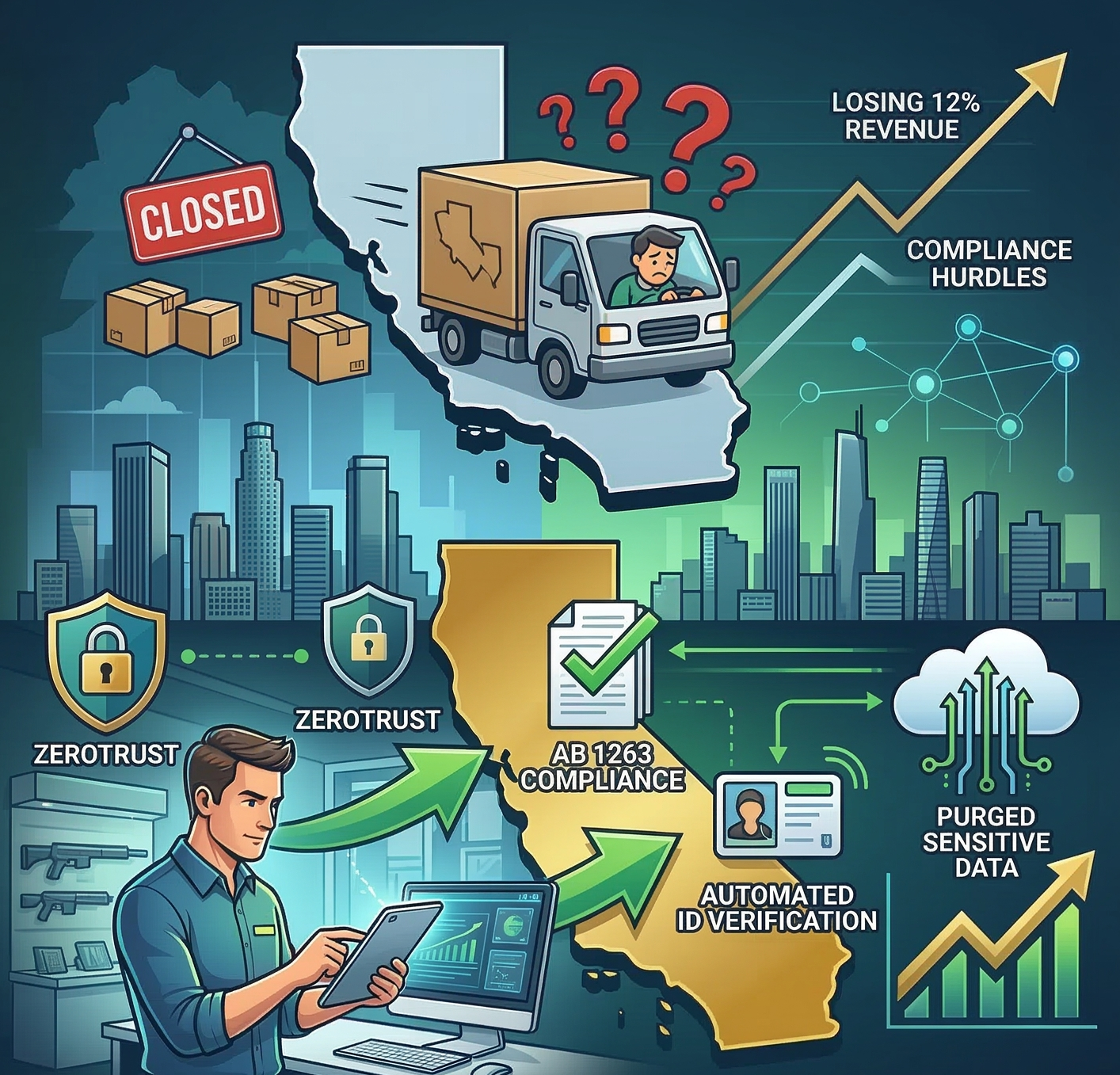
The California Exit vs. The California Strategy: Why Firearm Retailers are Doubling Down in 2026
While competitors flee the state, the "California Strategy" transforms AB 1263 compliance into a massive market opportunity for firearm retailers. Using Entrinsia’s ZeroTrust architecture, you can automate ID verification and purge sensitive data to stay audit-ready without losing 12% of your revenue. Do not retreat—reinforce your business by turning regulatory hurdles into a competitive advantage.