
Friction After the Click: Why the "Email Your ID" Workflow Is Silently Killing Your California Sales
Emailing customers for ID photos after checkout feels free, but it stalls orders, locks up inventory and invites chargebacks. Part 1 of a series on the hidden cost of manual AB 1263 compliance.


When California enacted Assembly Bill 1263, out-of-state firearm parts retailers and eCommerce brands shipping into the state were handed a familiar operational puzzle: comply with age verification mandates without disrupting the checkout experience.
For many retailers, the most pragmatic first step was an intuitive, low-friction workaround: let the order go through as normal, then have customer support follow up right after:
"Thanks for your order! Before we can get your package out the door, California law requires us to confirm proof of age. Please reply to this email with a clear photo of your valid government-issued ID."
On paper, this feels like a smart, zero-software solution. There are no developer hours to bill, no custom cart integrations to wire up, and no recurring software subscriptions. You're just asking for an email attachment.
In practice, this manual step creates two distinct categories of hidden drag on a growing business:
- What Happens to the Sale: The friction a buyer hits right after checkout—often leading to ghosted emails, locked-up inventory, and avoidable refunds.
- What Happens Behind the Scenes: The hours customer support spends chasing attachments, and the unintended compliance exposure that comes with holding personal driver's licenses inside a general inbox.
In this two-part series, we look at the true operational cost of the manual email workaround. In Part 1, we focus on the buyer’s perspective: why post-purchase friction quietly hurts conversion rates and what happens to orders stuck waiting on an email reply.
1. The Post-Purchase Buzzkill
In modern eCommerce, the moment a buyer clicks "Place Order," their mindset shifts into anticipation. The decision is made, their card is charged, and they expect one thing: a tracking number confirming their package is on the way.
When that anticipation is met with an administrative request asking for a photo of their government ID, the momentum stops cold:
- Skepticism & Privacy Guardrails: Consumers have spent years being warned never to email photos of sensitive personal identification over unencrypted channels. Legitimate, law-abiding buyers often pause, wondering whether the email is authentic or if their personal details will sit exposed on a company server.
- The "I'll Do It Later" Trap: Pulling out a wallet, lining up an ID without glare, snapping a photo, and attaching it to an email takes conscious effort. Buyers frequently think, "I'll take care of this when I get home tonight." In the rhythm of a busy day, most forget entirely.
- Second Thoughts & Buyer Remorse: Every day an order sits unfulfilled is an open window for second thoughts. An impulse build or weekend range purchase becomes a pending chore, dramatically raising the chance of a cancellation.
2. The "Order Limbo" Black Hole
The moment fulfillment depends on a customer checking their inbox and taking action, standard shipping timelines fall apart:
- The Spam & Filter Problem: While the initial automated order confirmation usually hits the primary inbox, follow-up messages requesting attachments or containing keywords like "ID" or "license" frequently route straight to Junk, Spam, or Gmail’s Promotions folder. The customer isn't ignoring you; they simply never saw the request.
- Frozen Physical Inventory: Because the purchase was authorized, the physical items—whether complete uppers, lower parts kits, or optics—must be pulled or reserved. That stock sits stranded on a shelf for 5, 7, or more days, unavailable to buyers in other states where orders could ship immediately.
- Warehouse Sorting Headaches: Picking teams end up managing physical bins of "held" California orders, manually checking order management systems to see if an email confirmation finally trickled through before printing shipping labels.
3. The Unseen Costs: Merchant Fees and Chargeback Exposure
When a buyer eventually ghosts the email thread, the order doesn't simply disappear without consequence. Unwinding an unverified order carries real overhead:
| Step in the Breakdown | Operational & Financial Consequence |
|---|---|
| Chasing Unresponsive Buyers | Support teams have to send multiple manual reminders, creating repetitive busywork for tickets that rarely convert. |
| Lost Merchant Processing Fees | Payment processors (especially high-risk firearm-friendly gateways) typically keep processing and gateway fees even when you issue a full refund. Canceling a $450 order still costs you money. |
| "Where Is My Package?" Calls | Customers who missed the verification email often assume the business took their money and failed to fulfill. Frustrated calls and negative reviews quickly follow. |
| Chargeback Disputes | A buyer who forgets they ordered or assumes the company is unresponsive may dispute the charge directly with their bank. In firearms eCommerce, higher chargeback ratios can jeopardize merchant accounts. |
4. The Modern Fix: Verification Before the Click
Friction should never be introduced after a purchase is finalized. When state regulations require compliance, the verification must happen smoothly inside the checkout flow—taking seconds, not days.
With an automated approach like ZeroTrust:
- Completed in Under 30 Seconds: Age verification and biometric liveness are confirmed within the normal checkout process before payment closes.
- Clean, Immediate Fulfillment: Once an order hits your fulfillment queue, it is already verified and cleared to pack. No pending bins, no follow-up outreach, and no reserved stock sitting in limbo.
- No Unencrypted Attachments: Customers never need to email photos of sensitive identity documents. The verification is handled through an ephemeral, privacy-first interface where the ID and selfie are processed and immediately purged, leaving only a cryptographically signed compliance token.
Relying on post-purchase emails might look like a free way to address AB 1263, but the hidden price tag shows up in canceled orders, tied-up stock, and frustrated customers.
In Part 2, we look behind the scenes: the actual labor hours spent manually reviewing attachments, and the unintended CCPA privacy liabilities of storing driver's licenses across customer service mailboxes.
Ready to Get Started?
See how ZeroTrust can verify identities in under 30 seconds.
Related Articles
California AB 1263: What Firearms Retailers Need to Know About the New Accessory Law
Assembly Bill 1263 takes effect January 1, 2026, creating new age verification and compliance requirements for selling firearm accessories to California residents. Complete guide for retailers.
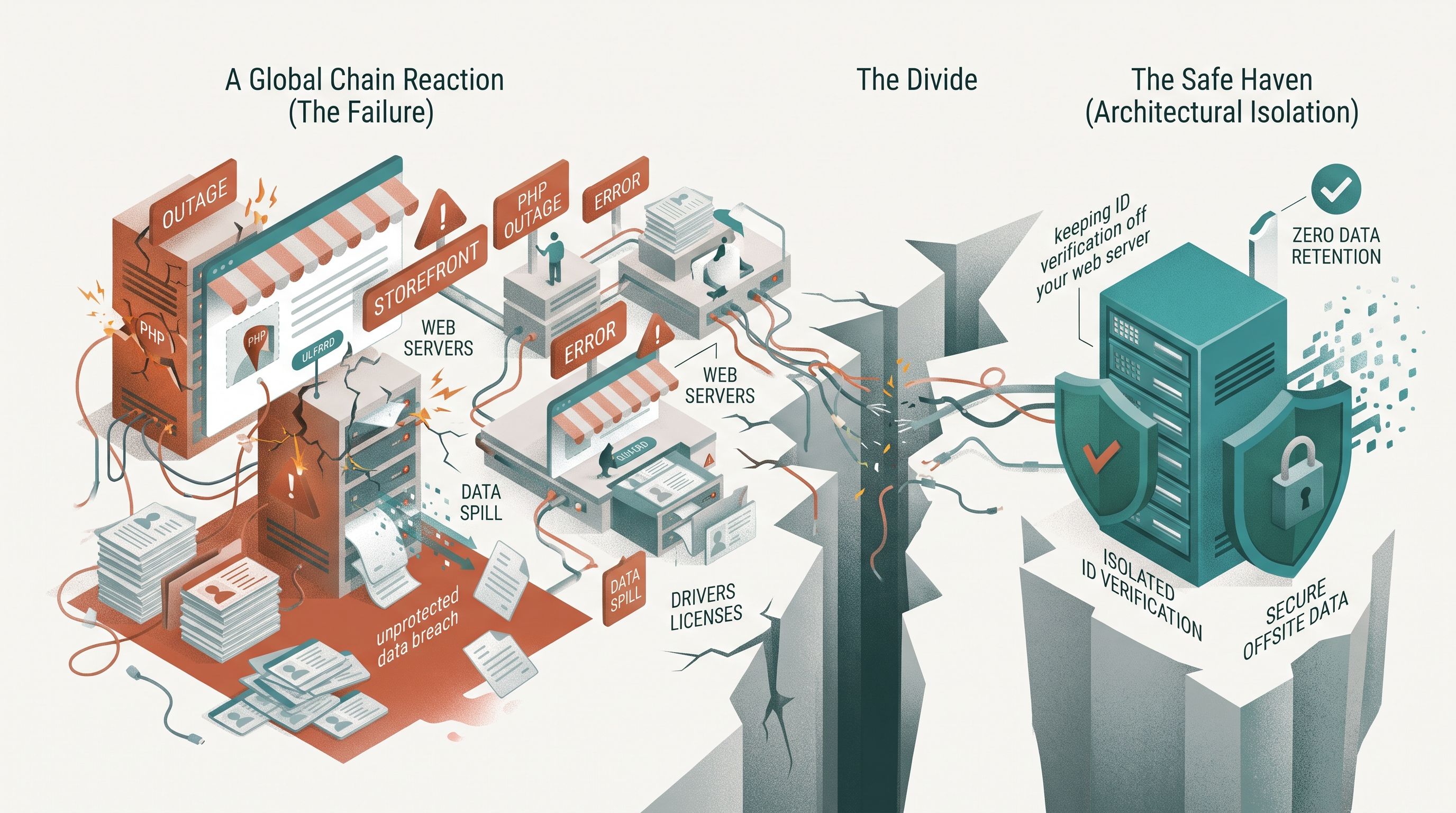
Architectural Isolation: What the Recent PHP Outage Teaches eCommerce Merchants About Storing Customer IDs
A storefront outage is a bad day. It becomes a data breach when the same server also holds your customers' driver's licenses. Here is why keeping ID verification off your web server limits the damage when something breaks.
How a High-Volume BigCommerce Firearm Accessory Retailer Automated California AB 1263 Compliance Without Hurting Conversions
How a high-volume BigCommerce firearm accessory retailer automated California AB 1263 compliance — age verification, ID matching, and audit records — directly inside checkout without disrupting conversions.