
Architectural Isolation: What the Recent PHP Outage Teaches eCommerce Merchants About Storing Customer IDs
A storefront outage is a bad day. It becomes a data breach when the same server also holds your customers' driver's licenses. Here is why keeping ID verification off your web server limits the damage when something breaks.

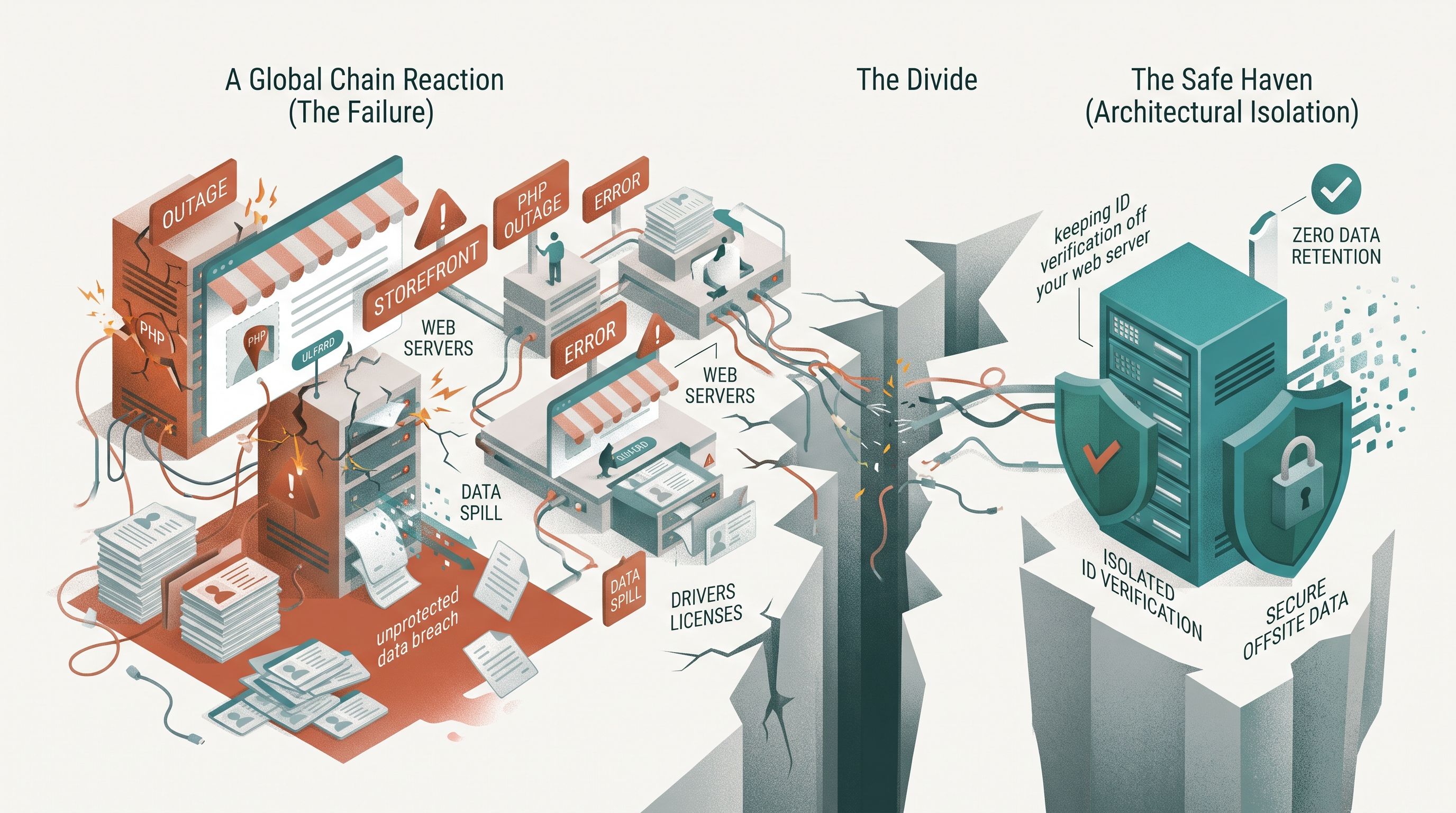
A few weeks ago, an upstream PHP bug rippled across the internet, taking down thousands of websites and breaking critical backend workflows overnight.
If you run an online store on WooCommerce, Magento, or a custom PHP stack, incidents like this are a familiar reality of doing business on the open web. Open-source commerce platforms move fast because they rely on interconnected runtimes, third-party plugins, and shared hosting environments. When an upstream update misbehaves, your engineering team or managed host patches it, clears the cache, and gets the storefront back online.
A temporary outage is a frustrating sales dip. It becomes a major business crisis when that exact same web server is also acting as a storage vault for your customers' driver's licenses.
Whether you are verifying buyers to comply with California’s AB 1263, shipping age-restricted products like spirits or vapes, or confirming identities on high-ticket orders to stop friendly fraud, where that verification happens matters just as much as the check itself.
The Blast Radius Problem
In systems engineering, blast radius refers to the maximum impact a single failure or security breach can have on an overall system.
When a merchant collects government IDs using a WordPress file-upload plugin, a custom checkout modal, or an email integration tied to their storefront, they dramatically expand their blast radius. They are co-locating two fundamentally incompatible workloads on the exact same server:
- The Storefront (Built for Speed & Merchandising): Your eCommerce server is designed to be public-facing. It runs dozens of third-party plugins for SEO, shipping rates, analytics, payment gateways, and marketing pixels. Every single plugin expands the surface area for potential bugs or vulnerabilities.
- Sensitive PII (Requires Hardened Isolation): Government-issued IDs contain full legal names, home addresses, dates of birth, license numbers, and facial photos—the exact data targeted by identity thieves and heavily protected under privacy laws like the CCPA.
When those two worlds share the same PHP runtime and file system, an upstream bug, a misconfigured directory permission, or a vulnerability in an unrelated marketing plugin doesn't just threaten your uptime. It exposes the /wp-content/uploads/ folder or database tables holding your customers' most sensitive personal documents.
Why Storefront Servers Make Poor Data Vaults
Most eCommerce platforms were never architected to be compliance vaults. Even with SSL certificates and standard web host firewalls, storing raw IDs on a storefront introduces chronic operational headaches:
- Plugin & Runtime Coupling: As the recent PHP incident demonstrated, upstream runtime issues can unexpectedly alter how files are handled, cached, or exposed. Tying identity storage to your storefront means every core update carries compliance risk.
- Backup Sprawl: Automated site backups—often stored on third-party cloud drives or staging servers—quietly duplicate every uploaded driver's license across multiple environments without your team realizing it.
- Regulatory Exposure: Under frameworks like the CCPA, holding unencrypted personal identification exposes merchants to statutory damages ($100 to $750 per consumer per incident) in the event of unauthorized access—turning a routine server compromise into a massive financial liability.
What Architectural Isolation Looks Like
The cleanest way to protect a storefront from compliance liability isn't adding heavier locks to your WordPress database. It is architectural isolation: separating the commerce engine from the identity verification engine entirely.
This is the core engineering philosophy behind Entrinsia ZeroTrust:
- Decoupled Execution: Your WooCommerce or storefront server handles what it does best—merchandising, cart management, and payment processing. When a transaction requires age or identity verification, the check executes inside ZeroTrust’s isolated, purpose-built environment rather than on your web server.
- Zero Retention as the Ultimate Firewall: Isolation prevents your storefront from touching sensitive files, and zero-retention ensures nobody else holds them either. Once our system validates the document data, captures the required attestation, and matches the ID photo to the buyer's live selfie, the raw images are immediately purged.
- A Clean, Lightweight Handshake: The only thing that crosses back into your eCommerce database is an immutable, tamper-evident verification receipt. You get verifiable proof of due diligence without a single byte of toxic PII ever landing on your PHP stack.
Engineering Peace of Mind
Upstream bugs, plugin conflicts, and server hiccups are inevitable when running an online store. With architectural isolation, an outage or vulnerability on your storefront remains a simple IT ticket—not a reportable data breach.
By keeping customer identification completely off your web server, you keep your site fast, your architecture clean, and your business insulated from the hidden risks of storing sensitive customer data.
Ready to Get Started?
See how ZeroTrust can verify identities in under 30 seconds.
Related Articles
California AB 1263: What Firearms Retailers Need to Know About the New Accessory Law
Assembly Bill 1263 takes effect January 1, 2026, creating new age verification and compliance requirements for selling firearm accessories to California residents. Complete guide for retailers.
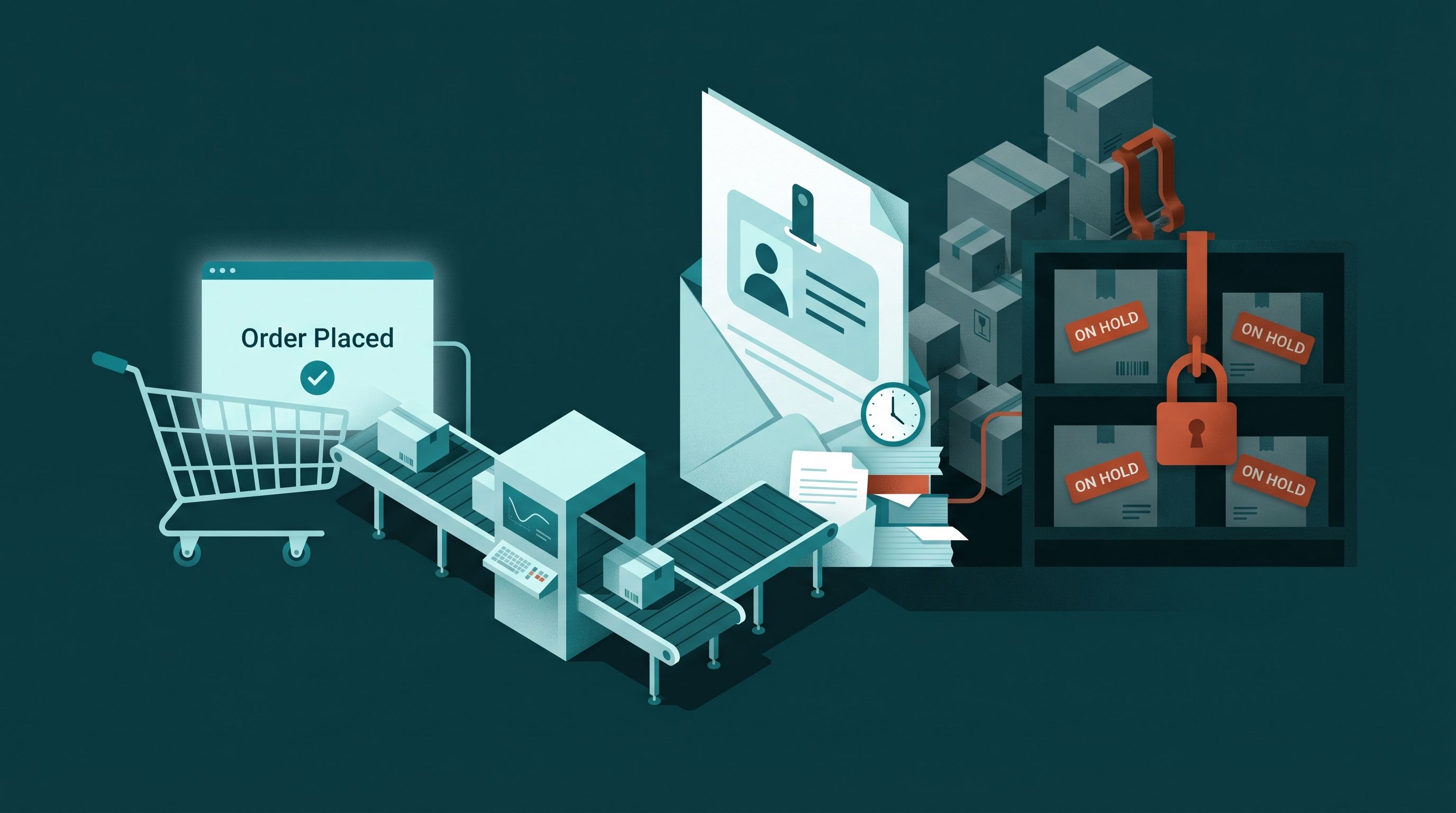
Friction After the Click: Why the "Email Your ID" Workflow Is Silently Killing Your California Sales
Emailing customers for ID photos after checkout feels free, but it stalls orders, locks up inventory and invites chargebacks. Part 1 of a series on the hidden cost of manual AB 1263 compliance.
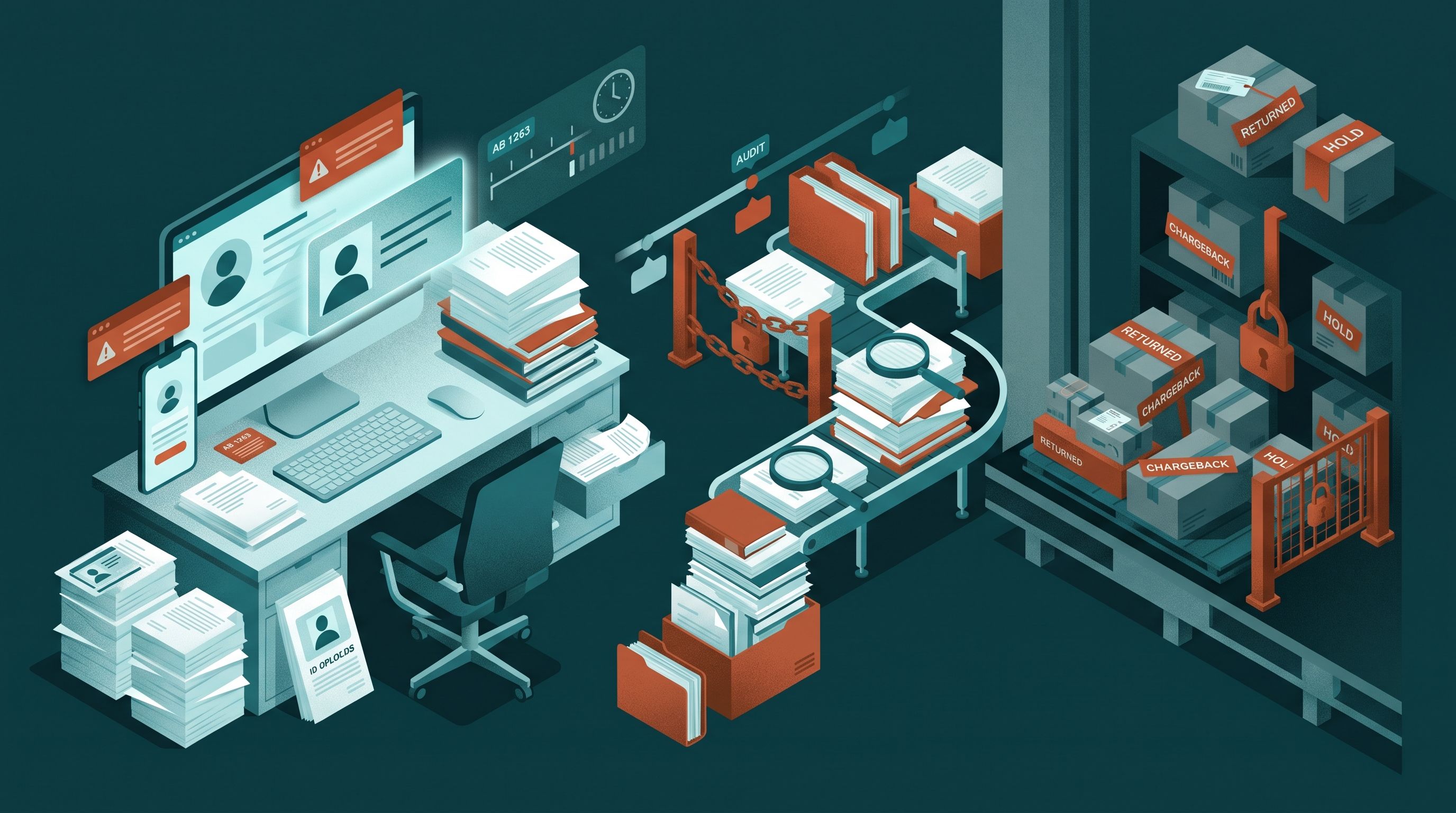
The "$0" Illusion: The Hidden Labor and Data Liability of Manual ID Verification
Manual ID checks cost far more than they appear to: hours of support payroll every month, plus driver licenses piling up in email inboxes. Part 2 of a series on the hidden cost of manual AB 1263 compliance.