
The "$0" Illusion: The Hidden Labor and Data Liability of Manual ID Verification
Manual ID checks cost far more than they appear to: hours of support payroll every month, plus driver licenses piling up in email inboxes. Part 2 of a series on the hidden cost of manual AB 1263 compliance.

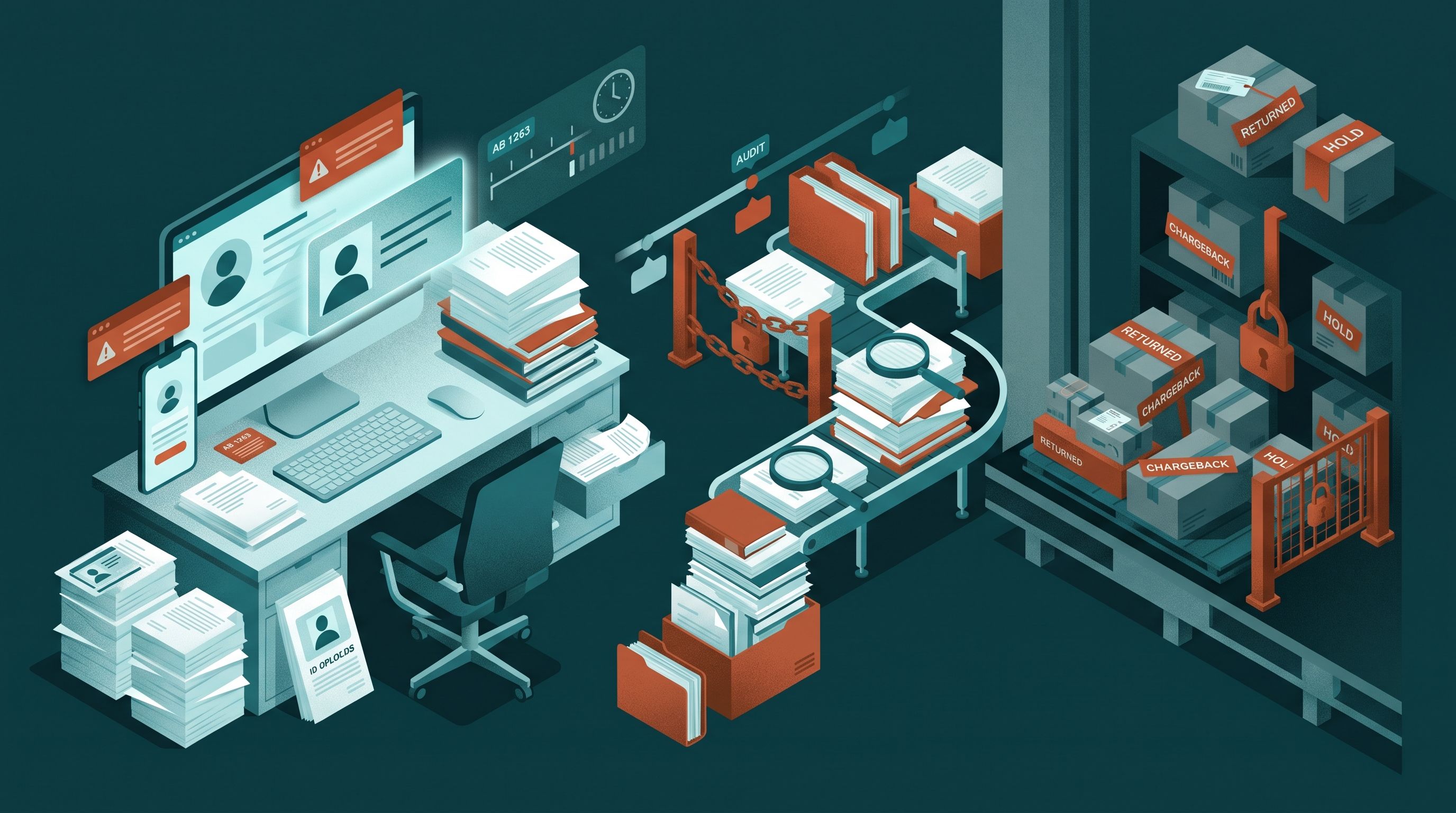
This is Part 2 in our series on California AB 1263 compliance for online firearm and parts retailers. In Part 1, we looked at what happens to the sale—the awkward post-purchase pause, ghosted emails, stuck inventory, and unrecoverable merchant refund fees. Here in Part 2, we turn our attention inward: to your payroll, your support team’s daily sanity, and the silent legal liability sitting in your email archives.
When California’s Assembly Bill 1263 took effect, asking customers to email a copy of their driver’s license after placing an order was a natural, understandable move. You didn't have to overhaul your checkout code, negotiate a new SaaS contract, or deal with complicated API integrations.
On paper, it looked like a clean, zero-dollar workaround.
The problem is that nothing in operations is truly free. When you don't pay for software, you pay somewhere else—usually in burned payroll hours and unhedged legal exposure.
When your customer service team becomes an ad-hoc identity verification department, you aren't just slowing down fulfillment; you're quietly turning routine support inboxes into high-risk data vaults.
The Support Desk Trap: When 5 Minutes Becomes a Full-Time Job
It is easy to look at an ID check and think, "It only takes thirty seconds to glance at a photo."
Anyone who has actually spent an afternoon in an eCommerce support queue knows that’s rarely how it goes.
A single manual check actually triggers a whole sequence of administrative friction. First, someone has to flag the order and send the request. Then they wait. When the reply finally comes, a support rep has to open the email, pull up the image, zoom in, and squint to make sure the expiration date is current and the birthdate clears the legal cutoff.
Then comes the detective work: does the name on the license actually match the billing name? What about the shipping address?
And that’s assuming best-case scenario. More often than not:
- The photo is too blurry or covered in flash glare.
- The customer cropped off the expiration date.
- The image was sent as an unsupported file format or trapped inside an unreadable HEIC thumbnail.
- The customer replies asking why on earth you need their driver's license just to ship a stripped upper.
By the time your rep writes a follow-up email, re-checks the replacement photo, tags the backend system, and releases the shipping hold, that "thirty-second check" has ballooned into five or six minutes of active human effort.
Run those numbers across an average month:
- If you ship 100 orders into California each month, your team is sinking roughly 8 hours into handling IDs.
- At 300 orders, that climbs to 25 hours—more than half an entire workweek spent opening image attachments.
- At 500 orders, you are burning over 40 hours a month. That is a full-time employee’s entire week wiped out by administrative busywork.
At an average customer support wage of $22 an hour, 300 to 500 California orders will quietly drain between $6,600 and $11,000 every year out of your business.
That isn't just money off your bottom line. It’s time stolen from answering high-intent build questions, recommending matching parts, getting boxes onto the shipping truck, and taking care of the customers who are trying to spend money with you today.
The Inbox Honey Pot: Why Collecting Driver's Licenses Is Playing With Matches
Losing payroll hours hurts your margins, but holding on to government-issued IDs can put your entire business at risk.
A driver's license isn't routine contact information. It is tier-one personal data: full legal names, home addresses, dates of birth, license numbers, physical descriptors, and facial photos.
When a customer emails that document to you, where does it actually end up?
It lands in a general support inbox. From there, it syncs to cloud servers and local laptops. A support agent might download it to their desktop Downloads folder to zoom in on a blurred birthdate. It replicates inside help desk software like Zendesk or Gorgias. It sits in the customer’s sent folder.
In cybersecurity, this is known as data sprawl—and it creates a major liability under California privacy laws:
- The CCPA Reality: Under the California Consumer Privacy Act (CCPA), failing to maintain reasonable security procedures for sensitive personal information exposes businesses to statutory damages between $100 and $750 per consumer per incident in the event of a breach. You don't have to be a Fortune 500 company to be targeted; automated scrapers and credential stuffers hit small-business mailboxes every single day.
- The "Honey Pot" Problem: Support inboxes are the front door to any eCommerce company. They handle dozens of inbound emails from strangers daily, making them the single most common target for phishing and compromised credentials. Storing unencrypted driver's licenses in that same environment is like leaving the office master key under the front welcome mat.
- The Data Subject Nightmare: If a California customer exercises their legal Right to Delete under state privacy law, can you reliably locate and purge every copy of their driver's license across your mail server, support tickets, employee downloads, and cloud backups?
The Compliance Illusion
There is an even deeper irony to the manual process: it rarely holds up to scrutiny anyway.
Customer service representatives are great at helping shooters track down parts and resolving delivery mix-ups. They are not forensic document examiners.
A static JPEG attached to an email proves only that someone has an image of an ID—not that the ID is genuine, not that it hasn't been edited with Photoshop, and certainly not that the person emailing it is the person pictured on the card.
Without biometric liveness detection and automated document forensic checks, manual photo collection gives you the operational burden of compliance without the evidentiary value. If an auditor, payment processor, or regulator ever reviews your fulfillment logs, an unorganized folder of arbitrary image files offers a shaky defense of due diligence.
What Real Due Diligence Looks Like: An Immutable Verification Receipt
The modern approach to AB 1263 isn't about setting up encrypted storage lockers or building complicated folder structures for customer IDs.
It is about verifying identity rigorously and refusing to hold toxic customer data.
That is the entire foundation behind ZeroTrust by Entrinsia:
- Automated & Instant: The customer completes verification directly during checkout in under 30 seconds. Advanced computer vision checks document security features, while biometric liveness ensures the person buying the item is genuinely who they claim to be.
- Zero PII Retained: Once the verification is complete, the raw driver's license image and biometric selfie are immediately purged from existence. You never store a customer’s driver's license, eliminating data breach exposure.
- An Immutable Verification Receipt: Rather than storing vulnerable photos, you store a tamper-evident audit record proving that:
- The government-issued document was forensically examined and validated.
- The required statutory age and legal attestation was executed and timestamped.
- The physical ID photo was biometrically matched to the live person presenting it.
- Hands-Off Fulfillment: Your customer service reps never touch an ID. When an order drops into your fulfillment queue, it’s already cleared, verified, and ready to pack.
Moving Past the Workaround
When AB 1263 first hit, asking customers to email their ID was a quick way to keep boxes moving. It was a triage decision in response to a sudden law.
But treating that workaround as a permanent strategy is costing you more than you think. You are paying for it in wasted support wages, delayed fulfillment queues, and an unnecessary target on your back under California data privacy laws.
By moving verification where it belongs—seamlessly inside checkout—you replace manual guesswork with an immutable audit trail. You protect your margins, protect your business, and get back to doing what you do best: shipping great parts.
Ready to Get Started?
See how ZeroTrust can verify identities in under 30 seconds.
Related Articles
California AB 1263: What Firearms Retailers Need to Know About the New Accessory Law
Assembly Bill 1263 takes effect January 1, 2026, creating new age verification and compliance requirements for selling firearm accessories to California residents. Complete guide for retailers.
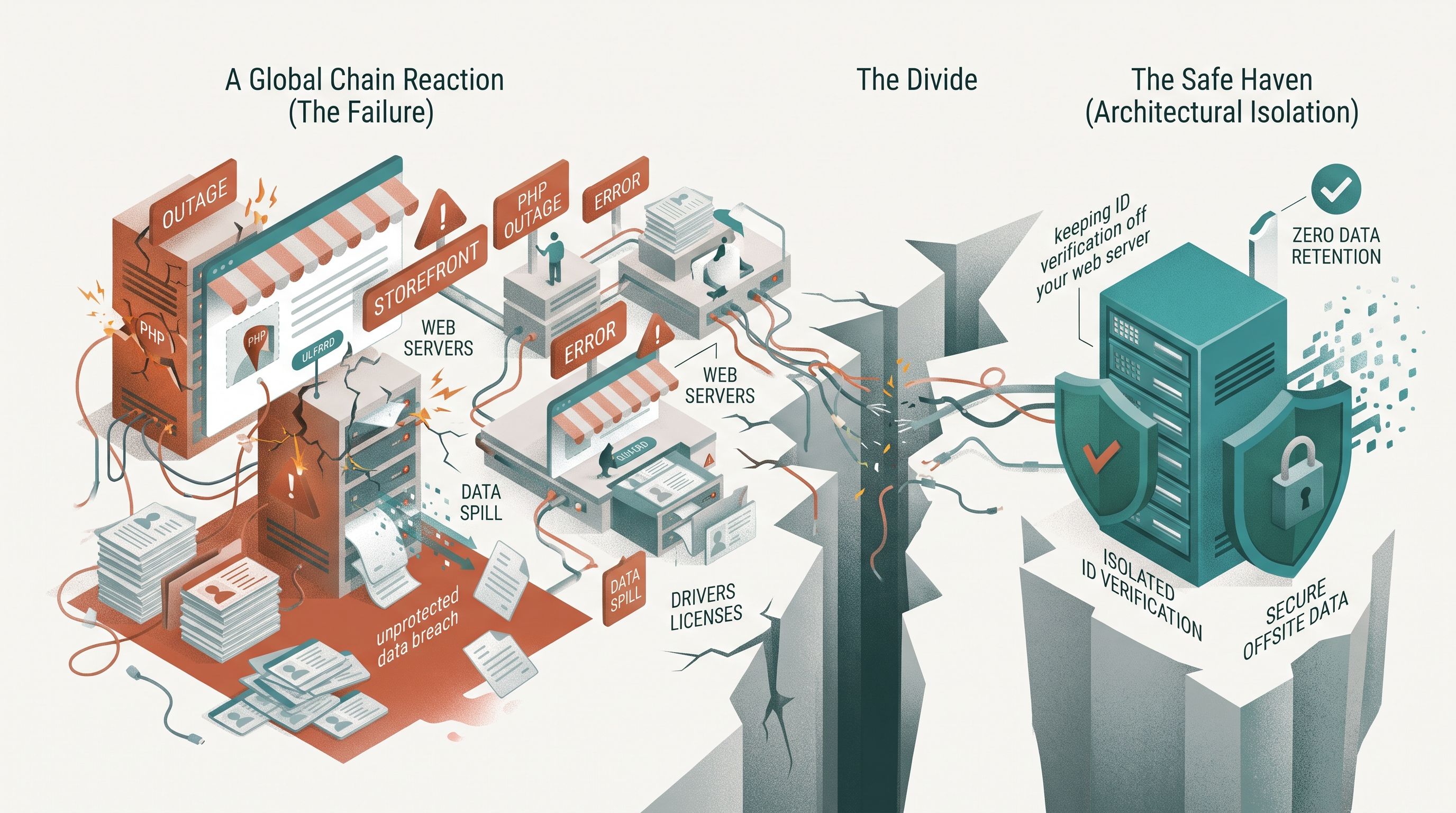
Architectural Isolation: What the Recent PHP Outage Teaches eCommerce Merchants About Storing Customer IDs
A storefront outage is a bad day. It becomes a data breach when the same server also holds your customers' driver's licenses. Here is why keeping ID verification off your web server limits the damage when something breaks.
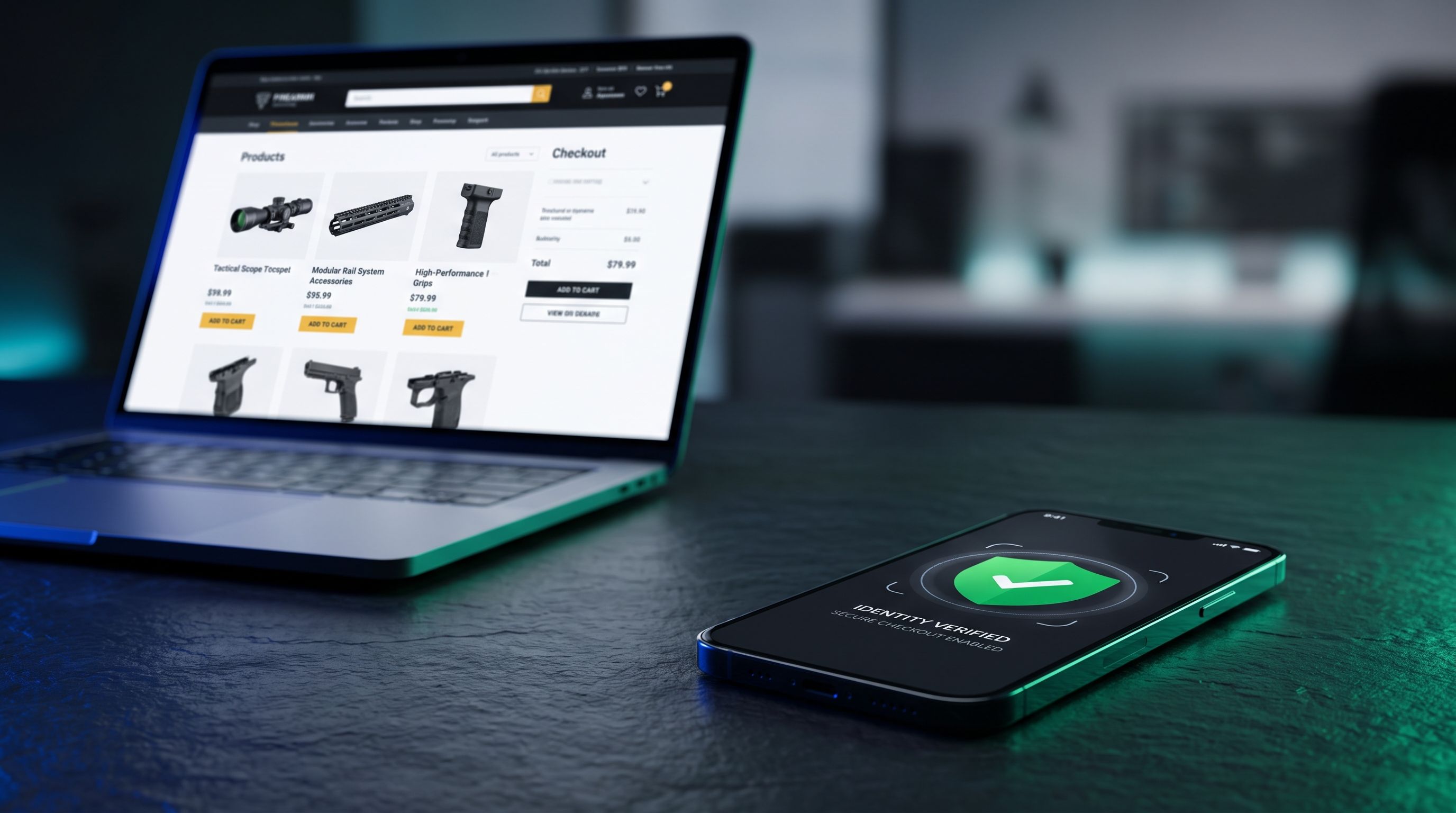
How a High-Volume BigCommerce Firearm Accessory Retailer Automated California AB 1263 Compliance Without Hurting Conversions
How a high-volume BigCommerce firearm accessory retailer automated California AB 1263 compliance — age verification, ID matching, and audit records — directly inside checkout without disrupting conversions.